Entradas

Mostrando las entradas etiquetadas como Being bilingual

FROM "GOING SOUTH" TO "IRSE AL GARETE" IDIOMS OF MISFORTUNE

Imagen
  When things go wrong and turn out differently than we expected -when expectations go awry- we instinctively reach for our idiomatic trove and pull out phrases like go to the dogs, go down the drain, go to rack and ruin, go to hell, go downhill, go south, come apart at the seams . These expressions, somehow, are very descriptive of our mindset in the face of fortune’s adversities; they help us let off steam and perhaps feel relieved, even a little better. Spanish is no exception, with expressions such as irse al garete, irse al traste, irse a la porra, irse al carajo, or irse a la mierda . As the Venezuelan writer Boris Izaguirre explains in his 1965 : “Pero todo el esfuerzo por mantener la relación entre cantantes míticos y los vehículos de sus padres se fue al garete ante la obstinación del destino.” The idiom carries the same expressive force in English, as David Lodge has one of his characters exclaim in Nice Work (1988): “No wonder the country is going to the dogs.”

MISA

Imagen
  Decir (cantar, celebrar) misa Say mass Mi hermano dice misa en esa iglesia My brother says mass in that church — “… como el sacerdote canta mi canta misa.” José María Conget, Todas las mujeres , 1989. Esp. Ir a misa Go to mass (church) Yo voy a misa todos los días I go to church every day — “… no deja pasar un domingo sin ir a misa.” Caras, 04/08/1997. Chile. Ir algo a misa Be (take as) gospel truth, what one says goes, be something set in stone Lo que yo digo va a misa What I say is (must be taken as) gospel truth / In my home, what my mother says goes En mi casa, lo que dice mi madre va a misa — “Pues no, lo que yo digo nunca se lo lleva el viento, lo que yo digo va a misa.” El Mundo, 15/01/1995. Esp. Misa del gallo Midnight mass El 24 de diciembre siempre voy a la misa del gallo The 24 th of December I always go to midnight mass — “La noche de Navidad, fueron a la misa del gallo…” Gabriel García Márquez, El amor en los tiempos del cólera , 1985...

WHAT DOES BEING BILINGUAL REALLY MEAN?

  If you are intrigued, then check Huffpost.US with link below. Copy and paste: https://www.huffpost.com/entry/what-does-being-bilingual_b_10630424

LEARNING TWO LANGUAGES

Imagen
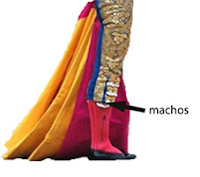
I believe that with patience and time we can always find exact equivalents in meaning for idiomatic expressions. These phrases may differ in their word components but keep the same meaning. A good example are: " atarse (apretarse) los machos " and " batten down the hatches ."  María Moliner says about "apretarse los machos": "Prepararse para afrontar una situación difícil." The Oxford dictionary explains about "batten down the hatches": "Prepare for a difficulty or crisis." One has a nautical origin and the other a bullfighting one.